Shared tracking of household stock and expiry dates. The point is not that it can record things — a spreadsheet does that — but that it gets several people to keep maintaining the same list.
The problem
A fridge and a pantry are shared, but tracking tools assume one user. So one person builds the list, nobody else updates it, and within a fortnight the data has drifted from reality. After that nobody opens it at all.
The second problem is the cost of the first entry. Ask someone to type in forty items by hand and most will stop around the fifth.
Technical points
Per-member permissions. Household members are not interchangeable — one person does the shopping, another only needs to look things up. Each member can have a different scope of action, so sharing does not have to mean everyone can change everything.
Offline support. The real usage context is standing in front of a fridge or between supermarket shelves, and reception in both is usually poor. Working offline is not a nice extra here; it decides whether the product gets used at all.
A bulk import parser. This is what removes the start-up cost: paste straight from Notion, Excel or Google Sheets and the parser infers the item, the quantity and the unit from free-form text.
The difficulty is that pasted data has no fixed shape. “Milk 2 bottles”, “eggs x10” and “flour 1kg” are three ways of writing the same kind of information. The parser has to tolerate that rather than demand the data be tidied first — because if tidying is required, typing it in by hand was never the slower option.
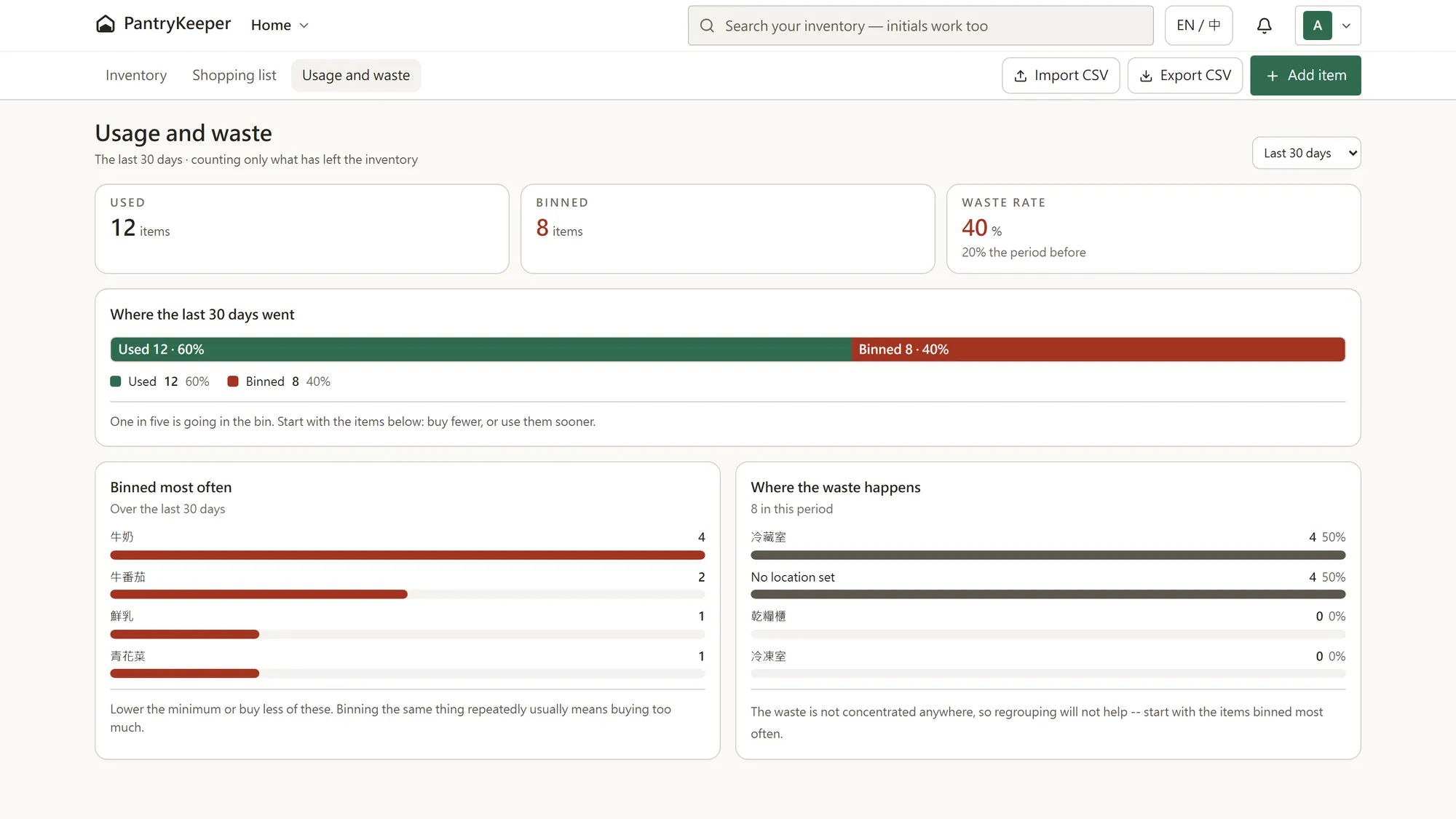
Waste statistics. Recording what expired and got thrown out shows people what they are actually wasting. This is the part that turns tracking into changed behaviour: knowing what is in the fridge does not alter how someone shops; knowing that three bags of vegetables were binned last month does.
Links
- Live: pantrykeeper.net